louise's picture

Specialists in the Spotlight

I caught up with some of SilverDisc’s paid search masterminds, Lorna and Mary, to grill them on their specialist subject - online marketing.

Hi Lorna! You’ve worked at SilverDisc and in online marketing since 2006. What’s your favourite thing about the job?

It’s an industry where the products and best practices are constantly changing, so we always have to keep on top of the latest developments - it really keeps you on your toes! I also really enjoy the insight that we get into user experiences online, from the keywords that people use to the way they navigate around a website.

What do you think the best AdWords development has been since you started working at SilverDisc?

I would have to say the introduction of the ad extensions features. There’s an ad extension to suit every type of business - from the click-to-call call extensions feature that benefits businesses without a great mobile site, to the product listings ads that help ecommerce advertisers to promote products more visually. Generally, the ad extensions give us more ad space, which increases our chance of getting those all-important clicks!

On the topic of AdWords developments, if you could make one improvement to AdWords, what would it be?

Looking into the future, I would rather keep device targeting as it is at the moment. The new Enhanced Campaigns approach means that we have no control when it comes to targeting our ads to tablet devices. It is very important that advertisers ensure that their websites are compatible with mobile and tablet devices, as they are so popular now, but I think it is only fair that advertisers have the final say when it comes to deciding where their ads are displayed.

Other than the keywords ads that you create, what outside factors can influence your PPC performance?

One of the most important factors is the usability of your website - make sure that conversions can be completed with ease. It is also important to keep an eye on your competitors to make sure that you can compete with them in terms of price and product range. Depending on your industry, you might also find that your conversion rates are affected by seasonality. Unsurprisingly, I have found that few people want to buy garden furniture when it’s raining!

Having looked into lots of AdWords accounts, what do you think is the most common mistake made by people advertising on AdWords?

It is really important to check your search query reports to make sure that you aren’t attracting clicks from irrelevant search terms. Add in negative keywords to make sure that your ads don’t appear for unrelated queries as they can lower your click-through-rates and conversion rates.

Finally, a burning question... would you rather have the ability to read minds or go invisible?

(After considerable thought) Be invisible – that would be quite good!

Hi Mary! You have worked at SilverDisc for a few years now. What’s your favourite part of working in online marketing?

We get the chance to work with a mix of clients, meaning that we get to speak to lots of different people about their business and products, learning lots along the way. And, as Lorna mentioned, it’s fun to keep on top of all of the industry’s latest developments and trends.

What would you say is the biggest advantage of pay per click advertising?

You’re in charge of the keywords that your ad appears for, meaning that you can put yourself in front of the people who are actively searching for your product. On top of that, you only pay when someone clicks your ad. As a whole, it is much more quantifiable than traditional media. You can also use the data that you get from your PPC campaign to guide the keywords that you focus on when it comes to SEO.

What common questions about PPC are you most frequently asked by clients?

Lots of people, very understandably, ask why they are not appearing in position one for their chosen keywords. In most cases it’s because the clicks are too expensive and we can’t achieve a good ROI if we’re spending that much on the clicks. It’s often more profitable to appear slightly lower in the results, where the clicks won’t be as costly. I have also been asked if it is advisable to bid on your own brand name, so I wrote a blog post about it!

Google has a huge market share so most advertisers just focus on AdWords. What is your view on Bing? Do you think it is worthwhile?

Yes – definitely. Clicks will often be cheaper than AdWords because there are less competitors, meaning your ROI could be better than AdWords if you achieve the same conversion rate. Bing is also the default search engine on the new Windows phones, so there are a good number of Bing users who probably won’t make the same search on Google. Don’t let those potential customers slip through the net.

Not including your own, what’s the best online PPC campaign that you have seen?

John Lewis have a great remarketing campaign. As far as I can tell, they don’t start showing the remarketing adverts straight away (unlike most advertisers using remarketing) so the display ad genuinely acts as a reminder about the product you were looking at. In terms of paid search, I have noticed that Dominos are always very quick to update their ads and ad extensions with their latest offers.

Conversely, what’s your favourite example of a online advertising campaign that has gone wrong?

I wrote a blog post about some social media campaigns that had taken a bad turn. My favourite was the McDonalds #McDStories hashtag which was hijacked by lots of funny tweeters. Although, perhaps it got more attention that way!

Finally... which of the Avengers would you rather be?

Obviously Iron Man because he is a billionaire! But really, anyone but Hulk...!

lorna's picture

Get More from Your Bing Campaigns

It’s easy to concentrate solely on your AdWords PPC campaigns, and who can blame you when it’s Google that delivers the volumes and conversions? 
 
Bing is often forgotten about, and Bing PPC campaigns are frequently neglected, but with advertisers reporting increased volumes, lower CPCs and better ROIs, perhaps they deserve a bit more attention? Here are some new features you could utilise to get more from your Bing campaigns, and some shouldn’t take too long to implement either.
 
Sitelinks
These have been available in AdWords for what feels like forever now, but they have only recently been available for all advertisers on Bing. We all know the positive effect sitelinks have on CTRs so why not implement them in your Bing campaigns?
 
Remember sitelinks are ideal for taking people to deeper, more relevant parts of your site. They are also great for highlighting special offers or deals, and some advertisers use them as additional lines of ad text too. 
 
 
Rich Ads in Search (RIAS)
It is worth speaking to your account manager to see if you’re eligible to have Rich Ads within your Bing account. See the below example of a Rich Ad in Search (RIAS): 
 
 
Rich Ads like this one need to be in a campaign of their own, and are only eligible to show for keywords that include your brand term – for example “Churchill Car Insurance”. Advertisers tend to see higher CTRs for these Rich Ads. You will need to talk to your account manager to get started with this as you cannot create them yourself within your account.
 
 
Business Location
You can now include your business phone number and/or location as part of your Bing ad:
 
 
This will be available for everyone sometime soon. They work in a similar way to Google’s Call and Location ad extensions, and will undoubtedly help searchers find what they want.
 
 
Device Targeting Remains in Your Control
There has been uproar recently over Google’s Enhanced Campaigns, and the diminished ability to be able to target PCs/laptops, tablets and phones separately. Bing announced that despite Google’s changes, their advertisers will still be able to target devices separately. This will be good news to those who have a website that is functional on a tablet device, but less so on a mobile. 
 
If you want help getting more from your Bing spend then get in touch!
mary's picture

A quick look at Remarketing with Google AdWords and Analytics


Have you ever visited a company’s website only to later find you are being followed around the internet by their ads? If the answer is “yes”, the chances are you are being remarketed to

.What is Remarketing?

Remarketing enables you, as an advertiser, to show ads across the web to people who have already visited your website. You can even make the ad specific to the pages a person has viewed. So, say your customer was lingering on a page on your site with those fabulous, bright pink shoes you sell; you can start showing them display ads containing the fabulous, bright pink shoes. Or if they have bought the shoes you could show them display ads promoting the handbag that goes perfectly with them!

Remarketing works well because the people you are targeting have already engaged with your brand on your website. You have already put the hard work in through great SEO or PPC or other forms of advertising to get them to visit to your site, now you are making sure they remember your brand while showing them products that they have already demonstrated an interest in.

A great example of remarketing done well is this from the Bodyshop; after I visited their “colour crush eyeshadow” page…


I was shown these adverts which showed several of their products including the “colour crush eyeshadow”. 


How does it work?
If you are remarketing with Google you will need to add a bit of code (a tag) to your website. This can be done in two ways, either by adding the code Google AdWords provides, or by using the code Google Analytics provides. Whether you choose to use the code provided by AdWords or by Analytics, you only have to add it once to each page on your website. Previously you had to create and add a different piece of code to every page you wanted to create a remarketing list for – this often resulted in a lot of pieces of different code present on your site.
 
Once the code has been added to your site you can start creating remarketing lists. The lists can be created either in AdWords or Analytics. You can create lists based on the pages people have visited on your website. If you use Google Analytics you have considerably more options on what to base your lists on. For example, you can create lists based on the time a person spent on your site, the number of pages they visited as well as many other metrics. So, if you only want to advertise those pink shoes to people who browsed your site for over five minutes, and you want avoid the people who have bounced off your site, you can.
 
Once there are over 100 people on your remarketing list, and you have created your ads, the campaign can begin.
 
If you’re thinking those ads that follow you around the internet are really annoying, or are "a bit much", or perhaps you’re not sure if remarketing is for you, then you should consider ad frequency capping. This allows you to set how many times your ad will be shown to a person, and therefore you can effectively advertise your product or brand without being one of those annoying advertisers.
 
Additionally, you can stop showing your remarketing ads to people once they have converted. 

Who should be using remarketing?
 
Remarketing can form part of an effective marketing strategy, whether you are a large company with a big budget, or a small company focusing on direct marketing to achieve a high ROI. As remarketing becomes more sophisticated, and you have more options when creating remarketing lists you can have more certainty that you are advertising the correct product to the correct people. 
 
Remarketing is a great way to capitalise on your existing visitors, turning them into returning visitors. Not everyone is impulsive when it comes to shopping, not even fabulous pink shoes are a sure thing! People do browse the web before buying, especially when it comes to expensive purchases like holidays and cars, and remarketing enables you to be there while your potential customer is wandering around.
 
 
nicola's picture

Goodbye Andrew, Welcome Marc!

Tomorrow we will be saying farewell to Andrew Jubb, one of our programmers, who is relocating to Wakefield with his wife Jen. We wish Andrew all the best!

Andrew’s replacement is Marc Brooks and we welcomed him to the SilverDisc team earlier this week.

Marc is based at the Kettering head office and will be working closely with our programming team based in Santiago, Chile.

Educated at Plymouth University, Marc has five years of web development experience and has previously spent three years working at Misco.

In his spare time, Marc enjoys playing squash and rugby, playing the guitar and, in his own words, “geeky stuff”!

chris's picture

Making Sense Of Google AdSense Part 3: Panda Problems


This article is part one of a three part series:

Part 1: Is AdSense Right For You?

Part 2: Managing The Good, The Bad And The Ugly

Part 3: Panda Problems: Laying Out Your Website To Avoid Panda Attack (You Are Here!)

You may remember the webmasters of the world getting in a bit of a tizz over a panda. It wasn't a panda that refused to reproduce and create more cute, sneezing baby pandas that the tech world was up in arms about, instead it was a Google algorithm change which dented the rankings of a fair few sites across the web.
 
Still none the wiser? Not sure how it relates to Google AdSense?
 
Mo' Panda Mo' Problems

What is the Panda update?

 
Panda did a lot of things - its main goal was to reduce the poor, spammy results which seemed to clog up the first page of Google’s results during 2010/11. The change meant aggregators and "boilerplate" sites with duplicate content were hit hard as well as many directories.
 
Prior to the release of the Panda update Google didn't seem to care how you laid out your site. You could, for example, have a site which only showed a few lines of content above the fold and the rest of the page could be dedicated to ads. The problem was such that "built for AdSense" sites popped-up everywhere, targeting some fairly long tail keywords efficiently and taking a click for nearly everyone landing on the page. The only goal of these sites was to gain a click from the visitor and fill the coffers of the website owner and Google. This might seem like a good situation for you, a website owner who wants to use AdSense as a revenue stream, but you know in reality it damages all parties and doesn't produce long term business.
 
(NOTE: Google obviously does care how you lay out your site when it comes to ranking, otherwise they wouldn't have produced the Panda update.)
 
Since Panda, Google have said website owners (AdSense publishers) have to be a bit smarter about their AdSense layout.
 

Why?

 
The new ranking factor which Panda introduced was partially designed to combat those "built for AdSense" sites. Why would Google do this? Surely they were making money?
 
The nature of most of those "built for AdSense" sites was one which laid AdSense out to appear as page elements, content, menus and generally take up screen real-estate with "non-content".
 
It's fair to say that a fair few of the clicks which trickled through these websites were clicks which were placed by mistake, or without understanding that what was being clicked was an advert.
 
While the publisher gets paid, it hurts everyone in the end. Google loses the trust of advertisers because advertisers get lower quality clicks, visitors are grumpy and don't visit the publisher's website any more (you could argue that this works out fine for the publisher, assuming they've got enough new traffic) which kills any repeat visits, sense of community or otherwise. This isn't the kind of website which Google wants to be associated with sending people to.

How To Avoid Panda Problems With Your AdSense

 
Naturally we all like to stay on the good side of Google. So how do we avoid these Panda penalties?
 
A rule of thumb is to ensure that at worst your AdSense is on an equal footing, or complimentary, to your content.
 

Don't Make The Page Useless

A visitor should know what they're doing on a page and not feel they really have to hunt for the page/blog title to give them their bearings. If your visitors are having trouble getting to you actual content, because of your ad placements, you probably need to rethink the layout.
 

Place Content Before Ads

While sticking all your ads above the fold is great for catching mistaken clicks, this layout will get you penalised by the Panda update. Ensure the balance of your ad units are below the fold. Put your ad units next to your content, not before or above it. This allows you to have the best of both worlds - the visitor is able to engage in your content and will also have a chance to see the ads.
 

Avoid Overdoing The Ads

While it's good to have a variety of adverts on a page, don't "overdo" it. If there are certain parts of a page which, when you pass over it, are a kind of desert filled with flashing advertising where visitors would have to look very hard for any substance... then you're probably doing it wrong. Keep the balance healthy.
 
Really, Panda doesn't change anything very much compared to the old ad sense guidelines, if you were following it closely back then your site is unlikely to be penalised. If you've been affected by Panda then it's likely you were going a bit overboard!
nicola's picture

Website Headers and Footers - Why they are important and what to include in them

The header and footer are key elements of a website. Typically, they contain links to important pages on your site that potential customers will often want to visit before making a purchase or enquiry.

It is important that these areas are used to their full potential, rather than being an afterthought or a ‘dumping ground’ for stray links that don’t fit anywhere else.

The header is the first thing that people will see when they land on your site. It sets the tone for the whole site, so think carefully about the colours and style you use.

You need to include enough information in the header to encourage customers to explore your site further. As well as clearly displaying your company name (and logo, if you have one), consider adding your USP. Tell customers why they should use your company rather than one of your competitors – do you offer free delivery, outstanding service, excellent quality or can you guarantee the lowest prices? If so, tell your customers!

If you do display your logo, ensure it is clickable, as it provides an easy way for customers to return to the home page. Always include a means of contacting you, whether that is a telephone number, a link to the Contact Us page or, preferably, both. Add social media icons that link to your social media pages – it’s another way that customers can connect with you.

The footer of a website is just as important as the header, as it is the last chance for you to grab a customer’s attention and encourage them to complete an action, such as making a purchase or requesting information.

Mega footers, or fat footers as they are also known, are becoming more and more popular. In the past, footers have generally been slim and only included a small number of corporate links to page such as a company’s privacy policy, site map and terms of use. As mega footers occupy a larger area of space than a traditional footer, it allows items such as images and even contact forms to be included.

Homebase is one company which makes excellent use of its footer space. The footer is well organised and the links are clearly laid out under useful headings so that visitors can quickly find what they are looking for. It adds a splash of colour with the social media icons, which encourages customers to stay in touch.


If you need any help with any aspect of your website design, then give us a call on 01536 316100.

louise's picture

Easter Digital Marketing Roundup

Have you missed out on the latest updates from the world of social media, mobile or pay-per-click advertising from the Easter period? You’re in luck – we’ve kept our ears to the ground for you!

Social Media News

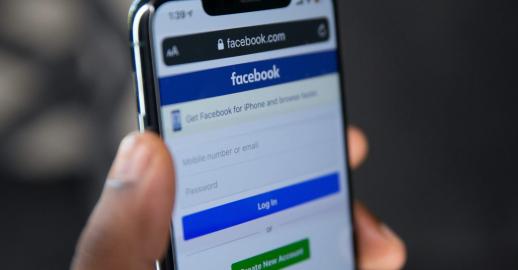
Facebook Update Cover Image Guidelines

When Facebook launched their new “timeline” for brand pages (back in March 2012) there were some fairly strict rules accompanying the cover photo function. Users were forbidden from including the following:

  • Price or purchase information, such as “40 percent off,” or, “Download it on socialmusic.com.”
  • Contact information such as a website address, email, mailing address, or information that should go in your page’s “about” section.
  • References to Facebook features or actions, such as like or share, or an arrow pointing from the cover photo to any of these features.
  • Calls to action, such as “get it now” or “tell your friends.”

Advertisers hoping to get the most out of their cover photo space will be pleased to hear that Facebook have recently relaxed their cover photo guidelines considerably, replacing the previous bullet points with the following rules:

Cover photos can't be deceptive, misleading, infringe on anyone else's copyright or be in violation of the Pages Terms. You may not encourage people to upload your cover photo to their personal timelines.

Cover photos must be at least 399 pixels wide and may not include images with more than 20% text.

The less stringent guidelines mean that we are now free to add our URL, special offers and other information to our page’s cover photos - just as long as the text doesn’t take up more than 20% of the image.

Google+ Make Improvements

Google+ recently announced some profile page improvements, supposedly in line with the feedback they have received from users. Profile pages now offer:

  • A tab for the user’s local reviews
  • More intuitive ways to edit your “about me” information
  • Very, very big cover photos!

YouTube Reach 1 Billion Users per Month

On March 21st YouTube released the news that it attracts 1 billion unique users every month – that’s nearly one out of every two people on the internet. YouTube thank “Generation C” for their growth, a term they have used to describe the young adult demographic that use their smartphones as a “complementary activity to their lives” - while they commute to work or school, wait for a friend or sit through television adverts. They also have Psy to thank – the man whose popular Gangnam Style video is the most viewed on YouTube.

Mobile News

Facebook Launch Android App

Facebook have just launched “Home”, a brand new mobile app that will allow Android users to transform their smartphone’s lock screen into a version of their Facebook news feed. In Mark Zuckerberg’s words, "You're going to be able to turn your Android phone into a great social device. Our phones today are designed around apps, not people. We want to flip that around." Home will be available on Google Play from April 14th. The HTC First, a new Android phone coming “pre-loaded" and “optimised” with Facebook Home, will be released on the same day.

Yahoo Buy Summly for $30 Billion

Yahoo have acquired Summly, a company founded 17 year old Nick D’Aloisio, for $30 million last month. Summly is an iPhone app that aggregates and formats articles from various new publishers into a summarised version of the content. The app as it stands now will cease operation, and the technology powering it will “come to life” through Yahoo’s mobile products soon.

Pay-Per-Click News

Google Disapprove Phone Numbers in Ad Text

Starting from this month, AdWords ads with phone numbers in text will be disapproved. Advertisers who want to display a number in their ad will be required to use AdWords’ call extensions - a feature that allows advertisers to include a phone number in desktop ads and a “click to call” button in their mobile ads.

neil's picture

SilverDisc At Northampton Business Event 2013 (NBE13)

So, I’ve reached another new milestone, I’m writing my first ever blog!!!

Following my Introduction to SilverDisc in a January blog from Nicola, I find it is now my turn to write the weekly post, and for my first attempt, I’m going to keep it simple and build up my ‘blogging’ experience!!

My responsibility as Business Development Director here at SilverDisc is primarily to manage the existing customer relations, develop new routes to market and of course new customers, and help build and create the growth plans for the business. What this all simply means is that I am the commercial guy in the office who needs to grow new business and retain existing. After all it’s all about growth and happy customers, and let’s not forget profit, both for SilverDisc and the businesses we partner with.

As part of the SilverDisc development plans, SilverDisc will be attending our first exhibition in some time, and it’s local to the office here in Kettering! It’s the Northamptonshire Business Event to be held at the Kettering Conference Centre on the 11th April. So why not come along and visit with us?

As a business specialising in Digital Marketing, we have a great and measurable track record of delivering fantastic results, for business of all shapes and sizes. Let’s face it, most companies these days need a website, whether it’s to promote a product or service, this is how we get ourselves and our businesses known, how to build and develop growth.

But there’s more to it than just having a website. Your website needs to deliver results, results which can be found by any prospective new customer be it from their workplace, or from the comfort of their own home. So how do you do this, how do you make sure your website is working for you? How do you measure success, how do you measure profit and growth? This is where SilverDisc can help.

Here’s the snap shot of one of our banners , which SilverDisc will be displaying at the exhibition, so you know where to find me.

SilverDisc Banner Image

So come along and let’s have a chat about how SilverDisc can help you grow your business in the ever changing digital world that we all live in...

There will be over 50 local companies exhibiting at the event, so I’m sure you will come away with new contacts and opportunities that will help you in your business aspirations. I look forward to seeing you on the 11th, now remember not too many Easter eggs this weekend!!!

lorna's picture

10 Ways to Improve Click Through Rates

There are plenty of reasons why your click through rate (CTR) is important. The obvious one is that a better CTR means more clicks on an ad. CTR also plays a big part in AdWords’ quality score calculations too, and the better your quality score is the less you’ll pay for clicks.

Bearing the above in mind, this week’s blog post gives you ten tips on how to improve your CTR.

1. Choose the right keywords and make good use of negatives
Your ad will never achieve a good click through rate if it appears for search queries it is not relevant to. Run search query reports to see what keywords are generating ad impressions. Look out for queries that are not relevant to your ads and add these as negative keywords. Take a search for “motorbike rider insurance” for example; the ad highlighted below is for equine insurance, not motorbike insurance.

Petplan could easily avoid appearing for motorbike insurance searches by adding negative keywords like “bike” and “motorbike” to their PPC campaign. Read more on negative keyword optimisation.

2.  Make ad text relevant to your keywords
Simply making sure your ad text contains the keywords you are targeting will increase your CTR. It’s useful to remember that keywords will become bold if they are present in your ad text. It will catch people’s eyes if they see the keywords they just typed into Google in bold and in ad text.

3.  Highlight offers and USPs
All too often we see ads that give people little reason to click on them. The space you have to write your PPC ad is small but there is plenty of room to detail what you’re offering and to highlight your USPs. For example your ad text should mention if there is an end of season sale running, or if you offer free delivery and/or returns. These are the kinds of things that entice people to click.

4.  Include a strong call to action
If you ask people to do what you want them to do in your ad your CTR will improve. Ask them to “Get a Quote Now”, or “Buy Online Now”, or “Sign Up Today” – but never write “Click Here”!

5.  Tell potential customers what’s in it for them
This goes beyond highlighting USPs and including calls to action, instead it's about wording ad text in a way that tells someone what’s in it for them if they click through. For example, in an ad offering gym membership you could just say: “Sign Up for Membership Now” or you could say “Sign Up & Get That Bikini Body”. In reference to a design software download you could say: “Download Design Software Now” or you could say “Download & Increase Productivity”, if you are selling sales training you might say “Book Your Sales Training Now” or you could say “Increase Sales Numbers – Book Now!”

6.  Make the most of ad extensions
CTRs are higher for ads where ad extensions are in place. Even though the ad extensions might not be clicked, an ad with an extension in place occupies more space on a search results page thus drawing the eye in. Take a look at the ads below; Littlewoods is occupying way more space with all its ad extensions enabled in comparison to the Ecosoftware ad that goes unnoticed:

7.  Use extended ad headlines
If an AdWords’ ad’s first line is clearly a sentence, and ends with proper punctuation, then description line one will be ‘moved up’ to become part of the ad’s headline when displayed at the top of Google’s results. You can use this space to give more prominence to any offers or great USPs life Giftlab.com have done below:


8.  Increase position
An ad that is always at the bottom of the search results for highly competitive terms will ultimately have a lower CTR. It is worth considering increasing bids to increase your position – if you do this it’s important to monitor your ROI closely.

9. Check your ad settings
AdWords’ default ad settings mean ads with better CTRs are displayed more often; however, during ad tests for example, you may choose to rotate your ads evenly. It is possible that these ad setting changes have been forgotten and ads with low CTRs will be showing as often as those with much better CTRs. It’s always worth double-checking your ad settings.

10.  Test, test, test!
One of the beauties of online marketing, and in particular AdWords PPC campaigns, is everything can be monitored and tested for true effectiveness. You should test ads with different promotions, calls to action and USPs to see which ones achieve the best click through rates. When looking at ads with the best CTRs try to figure out exactly what is about that ad that generated the better click through rate - was it an offer or a call to action – then factor this knowledge into your new ad text. Pause ads that have lower CTRs and always remember to set reminders when running ad tests to make sure you revisit them to check the results. It’s also a good idea to make a note of what you were testing, for example, a call to action.

If you want a hand, or some advice, on running a successful PPC account, including increasing CTRs, then we’d love to hear from you: contact us.


paul's picture

SilverDisc Chile: Living and Working in Santiago

About Me and SilverDisc

 Chile Flag

I am Paul Saffery, managing Director of SilverDisc Chile. This story is about the origin of the SilverDisc Chile operation, and explains what it is like to live and work in this part of the world.

My first encounter with SilverDisc happened back in May 1997, when I was looking for employment in the UK. I was in my early 30's and had lived all my life in Chile until then. SilverDisc were working with an old friend of mine at HarperCollins.  As a result, I met Eric Barfield, one of SilverDisc's founders, and we could tell straight away we both had similar mindsets when it comes to software development: robust, slick, efficient software practices, maximising reusability and automation. Eric helped me to get established in the UK and find employment at a software house in Derby, where I worked for three years.

In October 2000, SilverDisc invited me to do some contract work for them. The task was to convert a software prototype, called Search Mechanics, into a commercially viable piece of code based on some software patents developed by Alan Perkins, another SilverDisc founder. Search Mechanics was launched at SES 2001 in London and San Francisco and has since become part of SilverDisc’s internal toolset, used for the benefit of SilverDisc’s SEO clients.

In 2001, as I was having a family, I decided to return to my roots, in Chile, where I worked for nearly two years for a government agency, until October 2003, when Eric and Alan decided to grow the business and invited me to found the technology division in Santiago.

Why Santiago

Santiago is a vibrant city with a population of over 6 million. It was founded in 1541 by Spanish conqueror Pedro de Valdivia, in a valley in the central region of Chile. Santiago is surrounded by spectacular mountains, some peaks reaching almost 5,500 m (around 18,000 ft), and thriving ski resorts, which are about one hour drive from the SilverDisc office. We have Mediterranean weather, with five months of very warm temperatures and usually clear skies between November and March – the only downside is the winter smog!

Santiago financial district (also known as San-hattan) on a crisp winter morning after the rain.

The fact that Santiago is 7,248 miles from London, and the quickest flights between the two cities take around 17 hours, is not an issue with today's communications. SilverDisc use screen sharing technology, instant messaging and VOIP services to communicate effectively between our two offices. Being in timezone -4 is also an advantage, as it means that the Santiago office is open, on average, another four hours after the UK offices close. This allows the group as a whole to have a working day that is four hours longer than our competitors, offering excellent coverage to our clients. Timezone -4 also allows us to interact effectively with our clients on the East coast of the US, a country with more than 37m native Spanish speakers.

The Santiago Team

The Santiago team is dedicated to the development, configuration and usage of software and systems that are common across our whole client base: PPC bid management using APIs, reporting, issue tracking, lead handling, email systems, SEO and website analysis software, portals, The Answerbank (SilverDisc’s own social networking site), plus a few strategic highly specialised software modules for some of our key clients.

SilverDisc's office is on the top floor of this modern building at the centre of the Las Condes borough.

As the IT Director, I manage both the Santiago and UK IT teams. The UK team is dedicated to front end development, where a fluent and efficient communication with our clients, in their timezone and in English, is key. The team in the UK interact with content developers, clients, sales force and account managers.

Contact Our Santiago Office

Av. Apoquindo 5555, of. 1312 (metro: Manquehue)
Las Condes
Santiago
Chile
Tel: (+56-2) 2224 4478
www.silverdisc.cl

Further Reading

How to Survive in the Chilean Jungle - An amusing and true (mostly!) book describing the pros and cons of doing business between the UK and Chile.

Syndicate content